

Binance executive said enforcement actions and regulatory engagement ultimately led the company to pursue a locally compliant reentry strategy through the SEC’s sandbox framework.
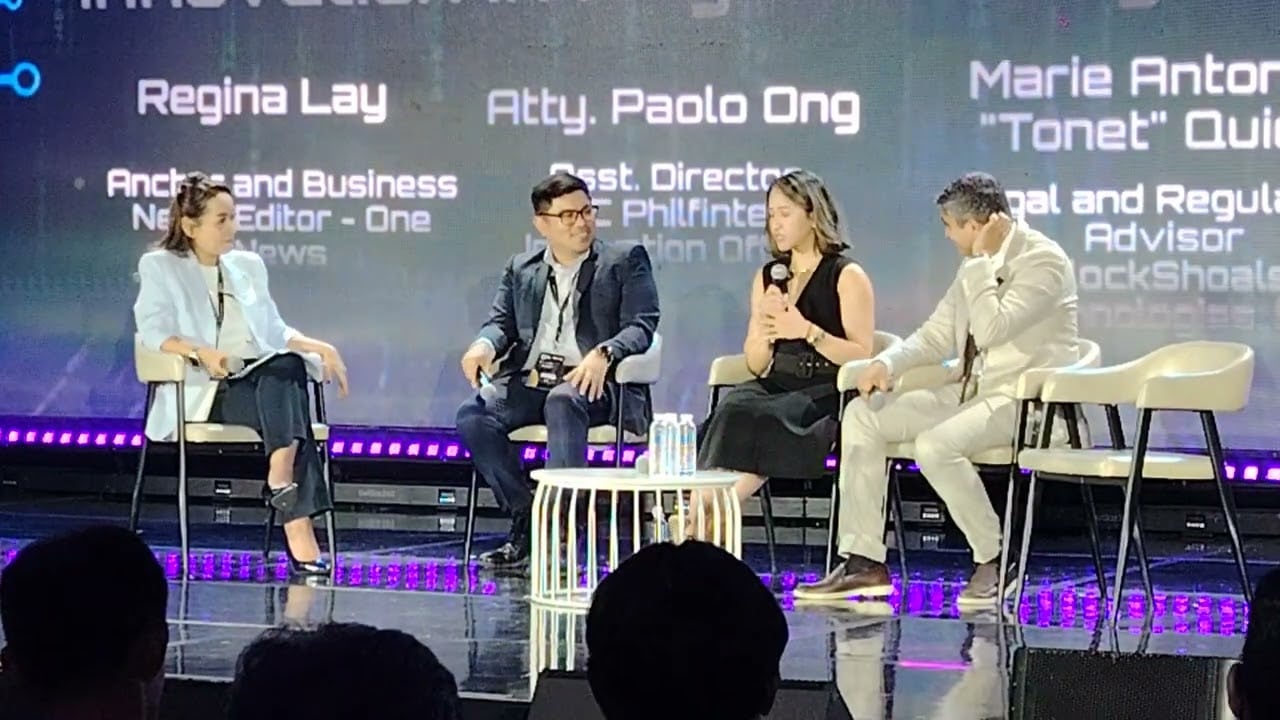
The following text presents the transcript from the panel discussion “The New Gateway: Building Trust, Access and Innovation in Regulated Digital Asset Markets,” featuring representatives from the Philippine Securities and Exchange Commission (SEC), Binance, and Blockshoals Technologies Inc. The panel happened during Philippine Blockchain Week:
- Paolo Montano Ong – Assistant Director at the PhiliFintech Innovation Office, Securities and Exchange Commission
- Marie Antonette Quiogue – Legal and Regulatory Advisor at BlockShoals Technologies. Inc.
- Raj Timothy Nandwani – Global Business Development – Marketing and Partnerships at Binance
- Regina Lay – Anchor and Business News Editor at One News (Moderator)
Please note that this written transcript has been edited for brevity, clarity, and readability. For the original, unedited, and definitive record of the discussion, readers should refer directly to the video recording of the interview that is also in this article, which remains the true and absolute source of the conversation. Subscribe to the BitPinas newsletter when we share more insights this week.
Video
The Road to Reentry: A Brief History
Regina: …. Thank you so much for sticking around. I know it’s been a long day for many of you, but I promise you we shall have a very interesting conversation.
Attorney Paolo, we have a bit of a history. So two years ago, I interviewed him on my show about the shutdown of Binance, and he was… Can I say it? Can I say it? He was defending it vigorously, basically saying that Binance has not applied for anything, not engaged meaningfully with the government, and basically done nothing at all. Fast-forward to today, we are in a very interesting position because now you have Binance making a comeback through a framework that the SEC put together.
So obviously, my first question is to you: what happened in that time?
Paolo: Thanks, Reg. I remember that time very vividly. So I guess you don’t know that that was my first week in my position at the SEC.
Regina: Oh, I’m sorry for grilling you on your first week!
Paolo: You grilled me to death! Anyway, yeah, so we’re very excited about this. Because of that moment that we had, the people from Binance came to the office and started a collaboration on how we enable Filipinos to get access to these products.
Developing the Regulatory Sandbox
Paolo: During that time, we developed the SEC Strategic Sandbox framework, which is essentially a regulatory sandbox with our partners at the ADB and partners from the UK FCA. Because of that framework, we also started to think about developing a framework for crypto asset service providers. After that year, we developed the crypto asset service providers rules and guidelines. Because of those two regulatory frameworks, entities like these guys can now come to the Philippines and explore the Philippine market.
Regina: So at the tail end of that, you were able to put together a concrete framework for the players. Raj, tell me your side of the story. What was that process like, and what did you have to demonstrate to the SEC to be able to come back in?
Raj: Yeah, I think it’s always good to remember history, right? So I think it’s great that you guys have history because a lot of people, when they see the news, are going to say that this happened overnight. But actually, this was the product of sustained, constant, and relentless communication with the SEC—almost right after you guys did your interview.
We wanted to first figure out what the SEC needed in order to help and guide them in terms of how we fit in as a global offshore exchange into a framework like the Sandbox that is now launched. From there, we figured out how best to do it, whether it was with a local partner, which is eventually the route we chose with Blockshoals here right now.
It was a long process. There’s a part of me that wishes it was not as long, but actually, now that we’re here, I respect the fact that it took us time to get there. It means we did the due diligence, we did our homework, and we actually put a framework together in terms of the way we enter that we think is robust and sustainable. We probably paved the way for all of our competitors as well. I think it’s the burden of the largest crypto exchange in the world to do that in local markets alongside the regulator.
The Shift Toward Local Compliance
Regina: I fully agree. But you went from not engaging to fully engaging. When did that switch flip?
Raj: It flipped when we got banned from the market. I’ll be very honest, right? Sometimes it takes enforcement to make a big company realize that we need to build roots locally. Don’t get me wrong, when that happened, Binance was only five years old. We were a young company. We’re slowly entering our adulthood—we’re nine years in, in a few weeks.
So it takes time. We’ve learned over that process that working very closely with regulators, working in line with the national priority, and investing in the country that is technically investing in us is the right path forward. That’s what we did over the last year or two.
Regina: That’s fantastic to hear. Tonette, let me bring you into the conversation. Tell us who Blockshoals is and how you sort of formed this partnership. What is the origin of this partnership, and when did you become the vehicle for Binance’s reentry?
Tonette: I’ll say a little bit about Blockshoals, but I think the engagement and wanting to find a partner came before finding Blockshoals. Blockshoals is a technology company. Its principals are engaged in different industries, including banking, financial institutions, and commodities—industries that are related to what Binance is looking at doing in the Philippines. It is officially registered and approved under the Crypto Asset Service Provider framework of the SEC.
Think of it as the bridge or the intermediary between the Philippine user and the globally licensed exchange platform, which is Binance. We basically make sure that Binance—and we trust them, we did our due diligence—operates in a compliant way in the Philippines. It wasn’t… I think we weren’t your first. You talked to a number of partners before you landed on Blockshoals.
Mapping the Philippine Corporate Landscape
Raj: Look, the way we look at entering markets, which is my primary focus, is we go into a market and do a strategic mapping session. We look at the 30 largest conglomerates and the 30 largest, most experienced stakeholders in that market, and we knock on everyone’s door. Not many people realize I’m actually Filipino, although I don’t look like one!
We basically spent a year speaking to every corporate you can ever imagine, every large business group, and every large family, trying to understand whether they cared about the crypto space and whether they were interested in coming into a JV (joint venture) and in what structure. That was a year-long discovery process. I’ll be very honest with you because I did those conversations myself: 80% of the time, we had the door slammed in our face. The reason why was because there was no clear path to what that licensing framework would look like, and it required stamina, which a lot of players here didn’t necessarily want to go through.
Tonette: Yeah, I remember, because I started as just an advisor for the principals of Blockshoals. When they first approached me two years ago, the way they proposed this idea was, “Tonette, we don’t know if this is real,” because there was nothing at that time. There was nothing.
Regina: Yeah.
Tonette: We were hearing so many things. If you don’t really do a deep dive into what Binance is and what Binance is trying to do, you hear all of these stories. So we didn’t know how the SEC was going to accept and receive them because of the publicity at that time. We didn’t know whether it was going to work, whether there was a framework, or whether, honestly, it was going to be worth it.
It was a discovery process for both of our groups on whether this would happen, and so many things had to fall into place for today to arrive. Some were within our control—we set up the company, we chose the best people who can represent Binance, and they did their due diligence. But there are also other things that the SEC requires—they’re very strict—that were not within our control and just fell into place in the international and multilateral space. For instance, the Philippines exiting the gray list; that was one of your requirements.
Regina: Of the FATF, yeah.
Tonette: Correct. Also, Binance finally receiving its global license from the ADGM, and Binance receiving favorable decisions from different courts and jurisdictions around the world, which the SEC was very particular with. I think all of those things just fell into place, and we were just in the right place at the right time.
On-the-Ground Operations and Consumer Protection
Regina: So this relationship didn’t come about overnight. But walk me through how it’s actually going to run on the ground. I know we’re still in the testing period, but theoretically, Binance is providing the technology, the operations, and the security infrastructure, and Blockshoals is just the licensed local partner. What is the user experience going to be like? And if something goes wrong—a customer loses their money, and so on and so forth—who has liability here?
Raj: When we looked at the sandbox framework, our view was that the goal of the sandbox—and obviously Attorney Paolo is here to verify this if I’m getting it wrong—the real primary goal was to offer Filipinos a way to engage with innovative products within the scope of Philippine regulatory frameworks and laws. Instead of being forced to engage with these products offshore, there is now a venue, hopefully for years to come, where they can engage with these products safely. If they have any issues, to your point, they have representatives locally that are licensed through Blockshoals.
But they can also come to us because we are on the ground. We have a head of market who’s here, we have an entire team here, and they can come to us and voice their grievances. When it comes to looking at consumer protection, we felt that doing it within the sandbox framework, where there is local licensing, was the appropriate venue.
In terms of a user interface, again, the goal was to give as close to the global platform user interface as possible because we know that’s what the Filipino users want. But the real goal is to make sure that everyone doing it offshore can now make sure that they’re onshore and attract as many people to come back into the purview of the SEC where they can still engage with these innovative products. I think the SEC has been incredibly open-minded and quite forward-thinking in the way they’ve approached that.
Tonette: So much love there now.
Regina: Tonette, did you want to add to that?
Tonette: First, you benefit from the global standards of Binance. They have their own dispute resolution, so users can go straight to Binance because they do have a contract with them. But the additional layer that Blockshoals provides, as required by the SEC, is that you are now under the regulatory purview of the SEC. If the Filipino users have any issues, they can go straight to Blockshoals as well. They can go to the SEC, and the SEC has a local entity to go to and say, “Hey, this user has an issue.”
Consumer protection has always been their requirement. We have to comply with the FCPA, which is the dispute resolution and consumer protection guidelines of the SEC. I think some of the users will realize that if they trade and use unregulated platforms, they actually can’t go to the regulators and ask for redress. That’s what we provide in this whole structure.
Of course, we also make sure that we file reports with the SEC. If the SEC needs any information from the global platform, it’s part of our agreement that we have to provide it to them. I don’t know, Attorney Paolo, if you want to add to that, but they ask for a lot of things.
Defining Crypto Assets: Securities vs. Investments
Regina: I suppose that is what the SEC was asking for to begin with: for you to come under their purview, right? Do I now—can I now read this as the SEC opening the door again to cryptocurrency and blockchain platforms? And secondly, can we just finally settle that debate: are cryptocurrencies securities?
Paolo: I’ve talked about this for quite some time already since we crafted the framework for crypto asset service providers. The SEC is focusing its regulations on one aspect of crypto, which is the investment aspect of it. We see that there are two main use cases: payments and investments. The SEC is narrowing down the regulations to the investment aspect, and we leave the other aspect to the BSP.
For crypto assets, in general, we see them as non-securities, but we classify them as an investment product under the Financial Consumer Product Protection Act, which is a relatively new law from around 2021. Because of that framework, we are able to craft rules based on not just laws, but international best practices, and find a way to enable local as well as global players to come to the Philippines.
Regina: What are the exceptions to that rule? They’re not securities except…
Paolo: They’re not securities in general, but there are aspects of crypto that we can consider as crypto asset securities. There are two main ways that we can classify them as a security. First is if the underlying asset of the token is a security as defined under Section 3 of the Securities Regulation Code. Another is if the offering of the product can be classified under the Howey Test and under the Securities Regulation Code as well. So if the instrument itself is a security or if the offering is a securities offering, we consider that a security.
The Role of the Central Bank and VASP Partnerships
Regina: So those are the exceptions to the rule. Speaking of the BSP, of course, the BSP has spoken and said that aside from the sandbox approval, you still need to partner with a VASP licensed provider. How are you handling that? (Read More: List of Licensed Virtual Asset Service Providers in the Philippines)
Paolo: If I can just add to that as well: when we were working with Blockshoals and Binance, we said that our framework is focused on this investment aspect only, and you definitely need to engage with the BSP on the other aspect. Our framework is for the investment aspect and the trading platform operations. Any trading activity would be with the SEC. The BSP regulates crypto service providers as money service businesses—specifically the conversion of fiat to crypto. With the VASP license, or inside the sandbox, if you don’t touch fiat, you can probably go through us. But if you are planning to do anything with fiat, you need a VASP license. (Read More: Inside Binance PH Comeback Plan: Whitepaper Outlines SEC-BSP Structure Behind BlockShoals Partnership)
Regina: Absolutely. That’s been very clear from the start. So how are you guys at Blockshoals handling that?
Tonette: Correct. As Attorney Paolo mentioned, neither of us is a VASP; Blockshoals is not a VASP, and Binance is not a VASP. It was always part of our plan, and it was submitted in our original application, that for anything that needs the movement of fiat to crypto and vice versa, we will be working with a third-party VASP provider.
Regina: I heard you identified a partner. I guess you can’t talk about it because you haven’t officially announced it yet.
Tonette: Yes, we want to announce it, and I think we will in the next couple of weeks. The parties are still conducting due diligence. As you can imagine, this is a new thing for any VASP. There has been nothing of this sort in terms of providing VASP services to a setup like this. We are all conducting our legal, technical, and compliance due diligence with the VASP, and the VASP is also doing that with Binance and Blockshoals.
There have been in-principle agreements. Our agreement with our VASP partner and even among ourselves is that we will disclose who it is once the due diligence is done and all of the approvals are in place. We understand that they have already informed the central bank that they are going to work with us. Hopefully, that process will conclude soon so we can announce it. Having a proper VASP licensed by the BSP is going to complete the loop—the magic circle. We talked to a lot of VASPs, and we ended up with a winner. (Read More: Just In: Binance Partner Blockshoals Selects BSP-Licensed VASP for SEC Sandbox Integration)
Future Outlook and Market Adoption
Regina: Okay, I shan’t press any more, but I look forward to the announcement. I’m running out of time, but I did want to hear closing thoughts from all of you. The brief for our panel talked a little bit about how cryptocurrency was moving from the margins to the mainstream. Is that a fair assessment? Are we really maturing? And with the sandbox, what are you hoping to get out of it? What’s the end goal here?
Raj: I don’t think the question is whether the cryptocurrency industry is mature. If you look at the world, the largest institutions—whether it’s BlackRock, Citadel, and the rest—are already in this industry. In fact, it has institutionalized a lot faster than most other industries that were much younger than us in the past.
The question is more about what the sandbox does for the country. If you look at the entire ASEAN, and it’s good to remember this year is a very special year for the Philippines being the chairman of the ASEAN, this new sandbox framework of the SEC actually positions the Philippines as one of the most innovative regulators in comparison to the rest of the region. It is one of the first retail-accessible derivatives frameworks, while also being able to attract foreign capital.
Binance, being one of the largest technology firms in the world, is now able to do real business locally as a local entity in the Philippines, partnering with local players and working with VASP entities to help prop up their businesses. This is going to usher in a new era of foreign investment and capital into the country. It’s an incredible use case of how regulatory frameworks, corporate innovation, and consumer protection can all come together to drive the national interest—bringing in more capital, better human resources, and driving investment in the economy. I really do believe that.
Regina: Very optimistic. Tonette, do you agree? You talked a bit about how the elements had to be in place and that it took a while to get to this point. So what is the dream here? What’s the promised land?
Tonette: I think the dream, first of all, is to protect the users. It’s not a secret that even prior to Binance being regulated in the Philippines, and even until now, there are still so many users on offshore and unregulated platforms. That was the number one requirement of the SEC: to bring them in. We call it the migration. We’re migrating them into a platform that is under the supervision of our SEC and our local regulators, which benefits the country as well.
The lesson is that while a lot of people want to mystify the whole process of how Binance was able to get in, honestly, the framework was already there. We started with just a sandbox at first. They had an idea, we wanted to test it, and things just fell into place with patience and continuous work with the regulators. Even a while ago, we were still discussing a product that the SEC had an issue with, and we resolved it. This is definitely not a short process; it’s a continuous, long-term collaboration with the regulator to benefit users. If you keep that goal in mind, everything else should follow.
The Scale of the Philippine Market
Regina: I forgot to ask, actually: how big do you reckon the market is here?
Raj: If you look at the Philippines in terms of demographics, it’s a 120 million population, 20% under 15, with an average age of 27. It is a very digitally engaged population. I think it could be a top-five market in Asia for cryptocurrencies. If you look at adoption today, we all remember the YGGs and the Axie Infinities of the past; it really made the space what it is today. The Filipino user is engaged and technically adept for this industry. It can be an incredibly large market, and I want more competitors to come into this market because fair competition will not only make the local players better, but it will expand the industry here, which is what I want to see.
Tonette: And honestly, Reg, I wanted to say this as a Filipino: we’re hearing a lot of negative things, especially now that capital markets are down and with natural inflation. This is a win. Being able to bring the biggest global cryptocurrency exchange to the Philippines is a massive win, and I think we should all take a moment to thank the SEC and celebrate it.
Regina: You’re right. The market sentiment has been quite bearish lately, so we want people to see this as a win, essentially.
Closing Remarks and the Fate of Legacy Accounts
Regina: Attorney Paolo, I’m gonna give you the last word. Raj talked about more competitors coming in. Again, the question is: is the SEC now opening the door wide to all the other platforms? And what, from your perspective, would you like to see from this partnership?
Paolo: Yes. Based on the policy direction of the leadership right now and the frameworks we have established, it’s safe to say that we welcome everybody. Talk to us, and let’s find a way to bring your products in safely. We’re really excited, especially in the Innovation Office, as we see new products and services coming in that will hopefully contribute to the development of the Philippine market.
Listen to our latest episode
Regina: And for this partnership between Blockshoals and Binance specifically, what are you hoping to get out of the sandbox?
Paolo: We’d love to see what they offer and witness how it brings concrete benefits to the market, to the people, and to investors. We’re excited about it, and hopefully, the project will be highly successful.
Regina: For the people whose money got frozen out during the shutdown, the ones who had accounts before, are they going to be able to jump back right in and reuse those accounts?
Paolo: That is a very tough question, just like during our last interview! We have been actively discussing this internally with the team and—
Regina: Okay, so it’s currently in discussion. Okay, I’ll stop giving you a hard time! There’s no more time left anyway, so we’ll leave it there.
This article is published on BitPinas: [Transcript] ‘The Ban Changed Everything’: Binance Reveals Two-Year Regulatory Journey Back to the Philippines — PBW Panel
What else is happening in Crypto Philippines and beyond?